
The Doughnut Economics Action Lab has developed a new suite of tools that help us to understand how to intervene in our economic system, which is in need of change.
What is Doughnut Economics? “If the 21st century goal is to meet the needs of all people within the means of the living planet - in other words, get into the Doughnut - then how can humanity get there? Not with last century's economic thinking. Doughnut Economics proposes an economic mindset that's fit for our times. It's not a set of policies and institutions, but rather a way of thinking to bring about the regenerative and distributive dynamics that this century calls for. Drawing on insights from diverse schools of economic thought - including ecological, feminist, institutional, behavioural and complexity economics - it sets out seven ways to think like a 21st century economist in order to transform economies, local to global. The starting point of Doughnut Economics is to change the goal from endless GDP growth to thriving in the Doughnut.”
At the bottom of this page are three documents about Food Systems and how Doughnut Economics offers an important way of intervening into food systems. The Gifts from the Valley itinerary is one way that four businesses are collaborating to offer travellers an insight into local practices that offer important benefits for both social benefit and ecological benefit. In particular, this itinerary demonstrates the following in its design, and what you will experience during the day:
Social Benefits
Food democracy in action - a local producer and local chef using local foods from this farm as the basis of a storytelling farm walk and a storytelling dinner.
Income and work - each of the four partners in this itinerary is paid a living wage for their services.
Food Culture - we are sharing with you how we grow food here in the Annapolis Valley, how it is grown regeneratively, and how that makes a difference in the way that food, wine, and forests taste. These producers and partners are award winning.
Community - we are supporting community initiatives as part of the revenues derived from this experience; we are also supporting local food networks that are in place.
Food literacy - we are helping you, our guests, to be food citizens, learning from the farm, the wine grower and the chef.
Ecological Benefits
Land conversion - as our guests, you will be walking on lands that are either protected forests, or regenerative farm lands whose soils are being careful nurtured through natural means (composting, recycling, organic fertilizers, green manure crops, permaculture techniques).
No hazardous chemicals are used by these businesses.
You will experience natural streams and creeks in both the forest and on the farm and winery where gaspereau, brook trout, birds, and a variety of insects and mammals find health running waters.
Biodiversity enhancement. The protected hemlock forest has three species at risk that are protected, over 20 bird species are known to nest here, and over 12 species of mammals use this forest as a wildlife corridor for safe movement (no hunting is permitted). As well, the winery and the farm are locations where biodiversity enhancement is part of the management practices.
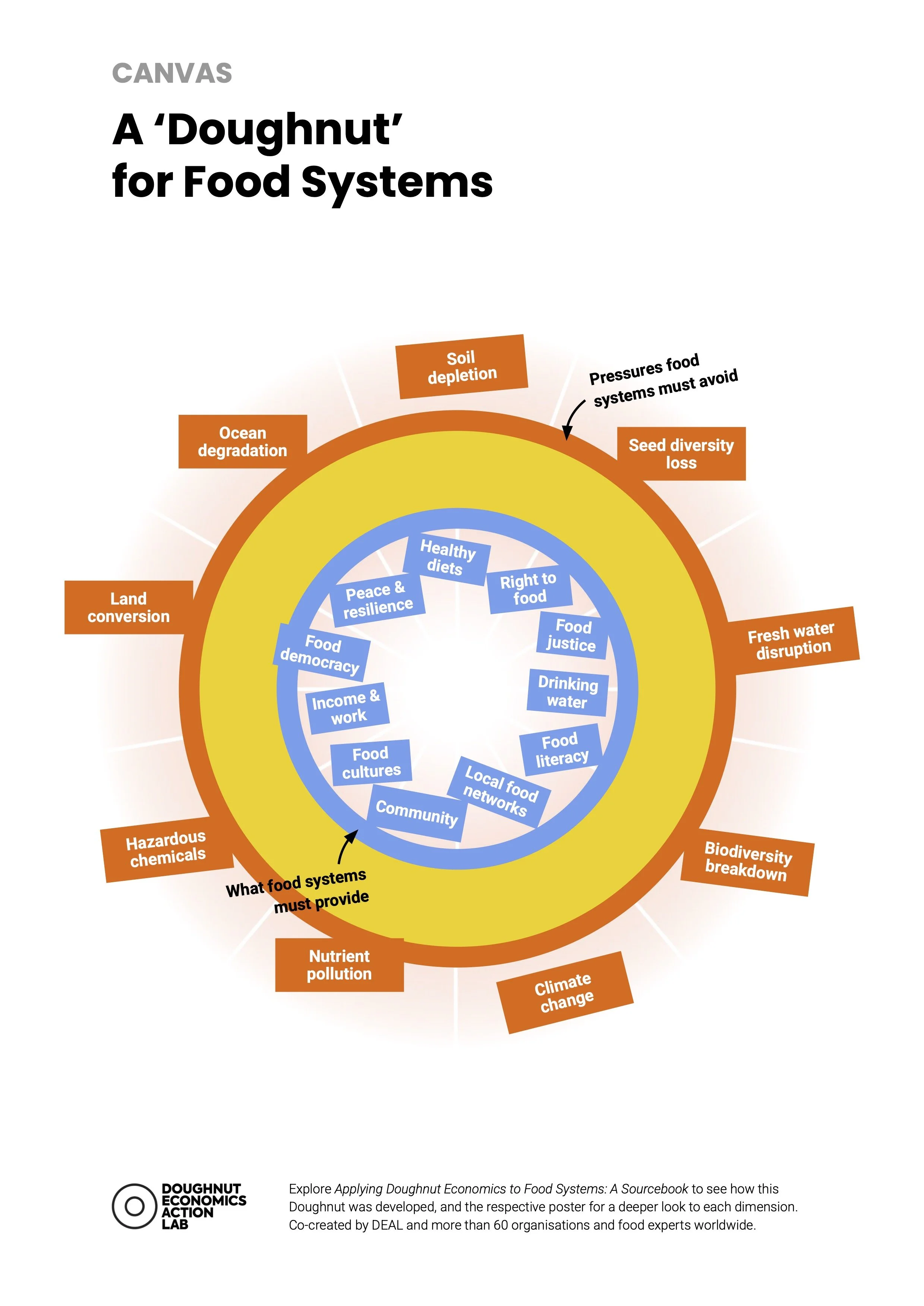
Doughnut Economics is rapidly being applied to various sectors of the economy. When applied to food systems, we have a better picture of how the social foundations and ecological boundaries require significant investments, thoughtful decisions and policies, and caring communities to help nurture a thrivable economy.
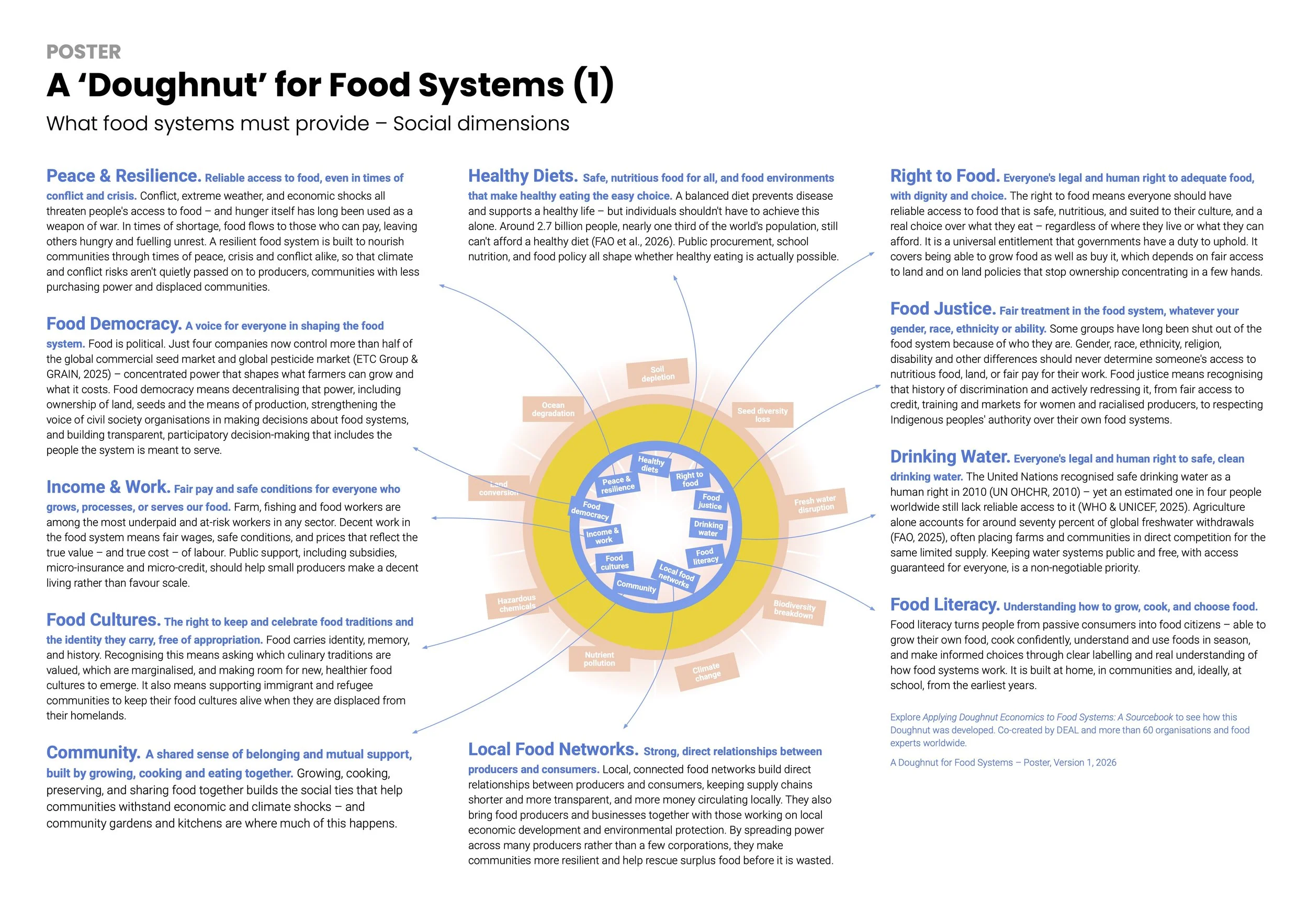
Detailed explanation of how the social foundations of an economy require thoughtful community, business and government investments
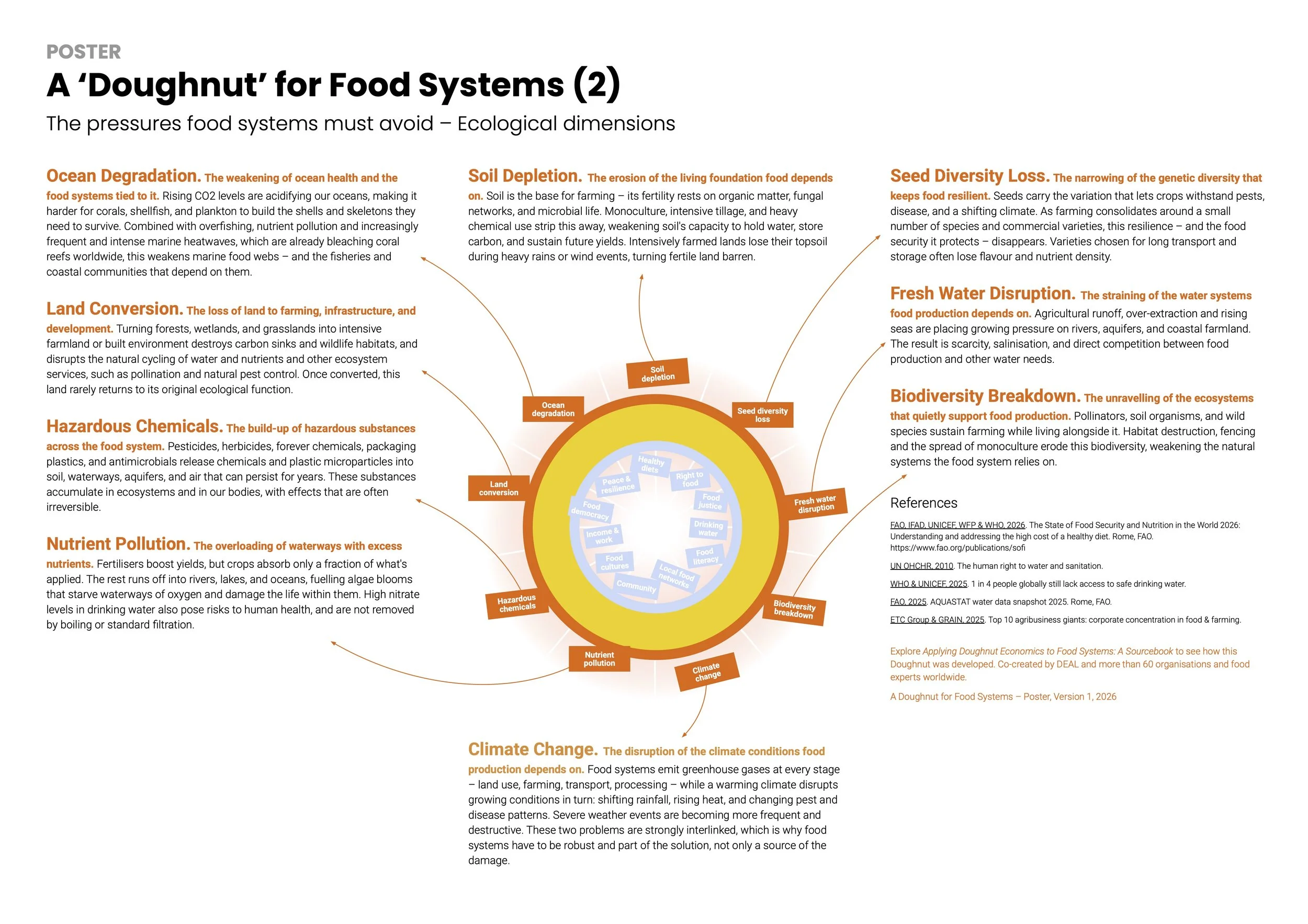
Detailed explanation of how the ecological boundaries of our economies require thoughtful community, business and government investments